
Historic Murphysburg
The Cadi Klein House

The 1890s home of merchants and community leaders Cadi and Clara Klein, whose business and religious work helped shape Jewish life in early Joplin.
At a Glance
- Address
- 622 S. Sergeant Avenue, Joplin, Missouri 64801
- Year Built
- Circa 1890s
- Architectural Style
- Victorian residence
- Current Use
- Private residence
- Public Access
- Exterior viewing only
- Preservation Status
- Standing
- District / Designation
- Murphysburg Historic District
Story
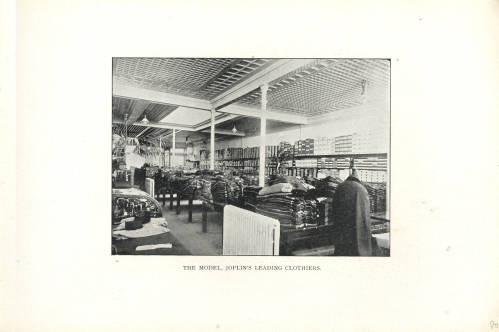
Cadi Klein immigrated from Krojanke, Germany, in 1881 and first worked in a Carthage clothing store owned by his uncle, A. H. Goldstein. After eight years, Klein became Goldstein’s partner and took over management of Joplin’s Model Clothing Company. He later purchased his uncle’s interest and became the firm’s sole owner, joining the generation of merchants whose businesses grew alongside Joplin’s mining-boom economy.
Klein’s influence extended beyond retail. He helped organize the United Hebrew Congregation and served as vice president on its first board of officers in 1916. As a member of the congregation’s building committee, he helped retain architect Austin Allen to design the synagogue at 702 South Sergeant Avenue. The building remains one of Joplin’s most distinctive sacred landmarks.
Clara Berlowitz Klein, also born in Germany, contributed to the same community. She served as a president of the congregation’s Ladies’ Aid Society and taught Sunday school for many years. Together, Cadi and Clara Klein illustrate how immigrant families built businesses, religious institutions, and civic networks in early Joplin.
The Klein House
The Kleins’ residence at 622 South Sergeant Avenue was built in the 1890s, only a short walk from the synagogue they helped establish. Its Victorian design includes carefully crafted architectural details and an especially notable corner fireplace decorated with raised classical-figure tiles. One upper tile depicts Michelangelo, and the composition resembles work associated with nineteenth-century American ceramic sculptor Isaac Broome.
The Model Clothing Store
Klein’s downtown business occupied the south storefront of the circa-1899 building at 407–409 South Main Street. Designed by Joplin architect August Michaelis, the three-story commercial block paired elaborate Revival-style brickwork and metal ornament with a deeply recessed storefront. The Model Clothing Store became one of Joplin’s established clothiers and endured for decades. Read together, the store and the Klein residence show how commercial success, family life, architecture, and community leadership were connected in turn-of-the-century Joplin.

407-409 S. Main St., c. 1899 Late 19th and 20th Century Revivals ~ Two-Part Commercial Block
This gray brick, three-story building is an excellent example of the influence of Revivalism on commercial architecture. The building is four bays wide, defined by symmetrical upper-story fenestration. Decorative elements on the upper façade wall include pilasters with Doric capitals, arched windows with pressed brick lintels and exaggerated keystones, and a full-width pressed metal cornice featuring brackets, swags, and dentils. The first story has two separate storefronts within the historic cast iron framing system - a small storefront at the north end and the double width storefront at the south end. The south storefront retains the original deeply recessed entrance characterized by arched openings and multiple display windows. Despite the replacement of the upper-story windows and small north storefront, the building retains its character-defining high-style decorative elements, fenestration pattern, unique façade treatment, and the historic south storefront. This building retains sufficient architectural integrity to clearly convey its historic associations...
The Model Clothing Store Building. This building replaced two earlier, two-story buildings. It is a rare surviving example of the work of the Joplin architect, August Michaelis. The building's earliest occupants were the Criterion Saloon (north storefront) and Cadi Klein's Model Clothing Store, an elite Joplin clothier. Both were long-lived commercial ventures that survived into the 1960s and 1970s. Over the years, the upper floors contained various occupants including a photography studio, and Michaelis' architectural office. The existing south storefront and parapet wall date to post a c.1902 remodeling.